Table of Contents
ToggleTiny home log cabins combine the charm of traditional log construction with the efficiency of small-space living. They’re not just scaled-down versions of full-size cabins, they require thoughtful design, code compliance, and a clear understanding of whether you’re building on a foundation or a trailer. Whether someone’s planning a weekend retreat, a primary residence, or rental property, log construction brings natural insulation, structural integrity, and a distinctive aesthetic that sets it apart from conventional tiny homes. This guide walks through the design, cost, and decision-making process for anyone serious about building or buying one.
Key Takeaways
- A tiny home log cabin combines stacked horizontal logs with interlocking corners as both structure and finish, typically ranging 100-400 square feet on a permanent foundation or trailer.
- Log walls provide natural thermal mass (R-8 to R-10 for 6-inch logs) that moderates temperature swings, reducing heating and cooling loads in climates with daily temperature fluctuations.
- Budget $25,000-$50,000 for a 200-square-foot owner-built cabin with mid-grade materials, plus $10,000-$20,000 extra for off-grid systems like solar and water collection.
- Trailer-mounted cabins are limited to 6’8″-7′ main floor ceiling height for road travel, requiring creative loft design and efficient built-in storage to maximize usable interior space.
- Log diameter (typically 6-8 inches for tiny homes) directly impacts wall thickness, weight, and thermal performance, making size selection critical for both trailerable designs and foundation builds.
- Foundation cabins require building, septic, and electrical permits, while trailer-mounted versions may avoid permits under RV classifications in some jurisdictions, though this limits financing and insurance options.
What Makes a Tiny Home Log Cabin Unique?
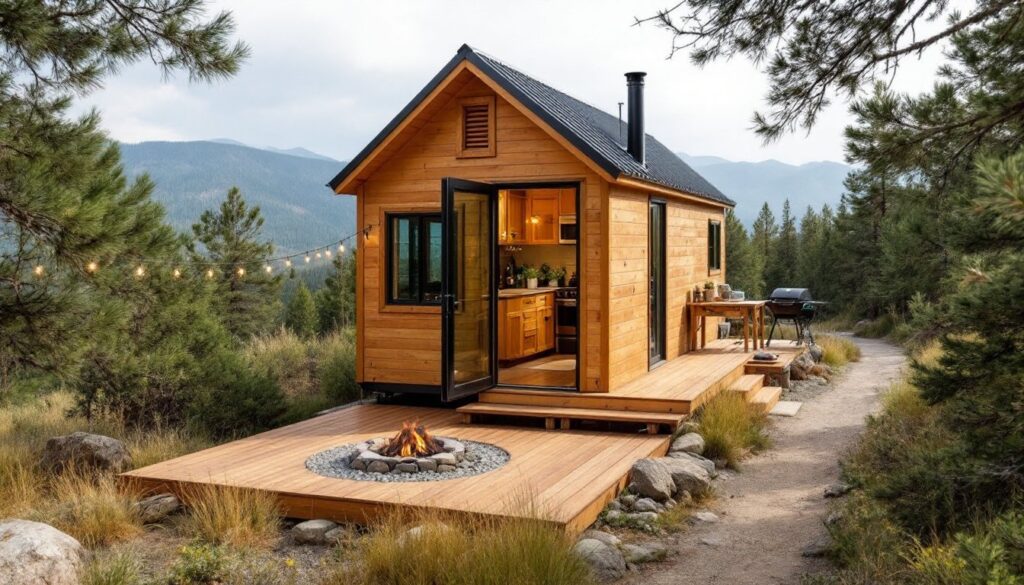
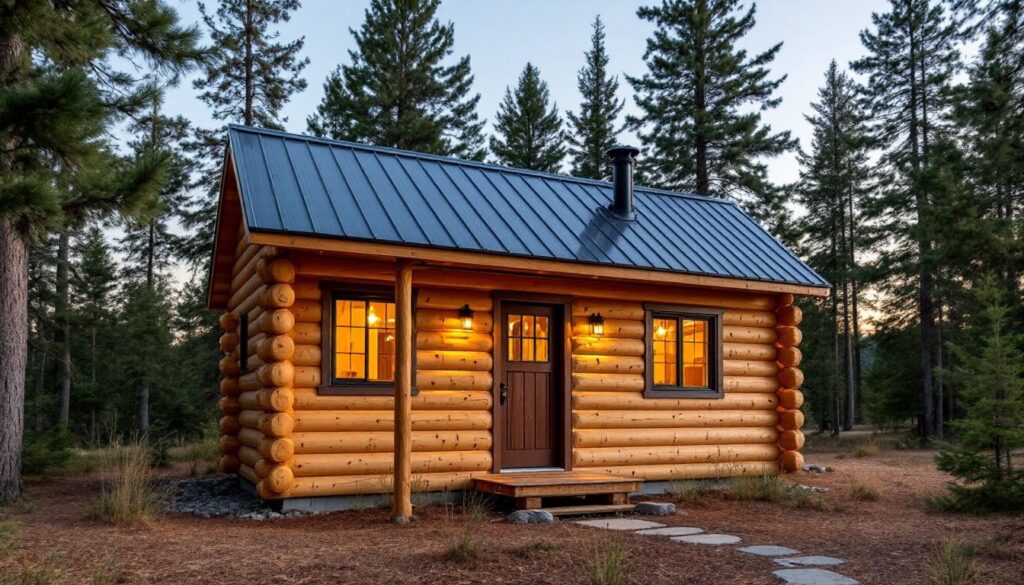
A tiny home log cabin isn’t just a cabin that happens to be small. The defining feature is the log wall system, typically full-scribe, Swedish cope, or milled logs, which serves as both structure and finish. Unlike stick-framed tiny homes clad in siding, log cabins rely on stacked horizontal logs with interlocking corners (dovetail, saddle notch, or butt-and-pass joints).
Most tiny log cabins fall between 100 and 400 square feet, either on a permanent foundation or built on a trailer to remain mobile. Foundation models must meet local building codes (often the International Residential Code, IRC), including frost-depth footings and egress window requirements. Trailer-mounted versions typically follow RVIA or NOAH standards if intended for road travel, though some builders opt for non-certified custom designs.
Log diameter matters. Smaller cabins often use 6- to 8-inch diameter logs to keep wall thickness reasonable and reduce weight, especially for trailer builds. Larger logs (10+ inches) provide better thermal mass but add significant weight, critical if the structure needs to stay under 10,000 pounds GVWR for trailering without a CDL.
The wood species changes performance. Eastern white pine and Western red cedar are common for their workability and natural rot resistance. Douglas fir and spruce offer strength but require more aggressive sealing. All log cabins experience settling, up to 1-2 inches per 8 feet of wall height in the first year, so builders must include adjustable jack posts around door and window openings and avoid rigidly fastening plumbing or cabinetry to log walls.
Benefits of Choosing a Log Cabin for Your Tiny Home
Log walls deliver thermal mass that moderates temperature swings. A 6-inch log wall has an R-value of roughly R-8 to R-10, lower than a conventionally framed and insulated wall, but the mass delays heat transfer, keeping interiors cooler in summer and warmer in winter. In climates with daily temperature fluctuations, this can reduce heating and cooling loads.
Structurally, stacked logs are inherently strong in compression. The interlocking corners and full-height bearing eliminate the need for separate studs, though roof loads still require proper sizing of ridge beams and rafters. This means fewer hidden cavities where moisture and pests can hide, and easier inspection over time.
Aesthetically, log interiors need minimal finish work. No drywall, no paint, just sanded and sealed wood. This cuts labor and material costs during construction and simplifies future maintenance. It also appeals to buyers or renters looking for that classic cabin feel, which can increase resale or rental value in rural or tourism-heavy markets.
From a DIY perspective, log cabin kits with pre-cut, numbered logs make owner-builder projects more feasible than full stick-framing. Manufacturers mill logs to spec, include detailed plans, and some offer on-site assembly assistance. That said, log work still requires carpentry skills, especially for scribing, notching, and chinking.
Design Considerations for Tiny Log Cabins
Tiny log cabins demand efficiency in layout. Unlike larger homes, there’s no room for hallways or oversized furniture. Start with a detailed floor plan that prioritizes function: sleeping loft or main-floor bedroom, full bath or composting toilet, full kitchen or kitchenette.
Ceiling height is often the tightest constraint. Trailer-based cabins max out around 13’6″ total height for road travel, leaving roughly 6’8″ to 7′ interior ceiling height on the main floor after accounting for trailer deck, floor framing, and roofing. Lofts accessed by ladder or steep stairs (often 14-16″ rise) bring headroom down to 3-4 feet, suitable for sleeping but not standing.
Foundation cabins can go taller, 8 to 10 feet on the main floor and full stand-up lofts, but local zoning and setback rules apply. Some jurisdictions classify structures under 200 square feet as accessory buildings with relaxed permitting, while others treat any dwelling as a primary structure requiring septic, electrical, and building permits.
Window and door placement is more constrained in log construction. Every opening requires a header beam to carry the roof load and settling space above the frame (typically 1.5 to 2 inches) filled with compressible insulation. This limits the number and size of windows compared to stick-framed walls. Plan openings during design, not as an afterthought.
Log cabins need chinking or caulking between logs to seal gaps. Traditional chinking was clay or mortar: modern synthetic chinking (like Perma-Chink or Log Jam) stays flexible as logs expand and contract. Budget for re-chinking every 5-10 years, especially on the weather-facing side.
Maximizing Interior Space
Built-ins are non-negotiable in tiny cabins. Freestanding furniture eats up floor area. Custom benches with storage underneath, fold-down tables, and wall-mounted desks keep the footprint open. In log interiors, builders often frame interior partition walls with 2x4s rather than logs to save space and allow for hidden wiring and plumbing.
Loft design should consider more than just sleeping. Include a small dresser nook, reading light, and ventilation (either an operable window or vent fan). Loft floors are typically 3/4-inch tongue-and-groove plywood or 2×6 decking spanning engineered I-joists or solid lumber joists. Don’t scrimp here, squeaky, bouncy loft floors are a constant annoyance.
Vertical storage and hooks everywhere. Wall-mounted racks for skis, bikes, or firewood keep gear organized without claiming floor space. Overhead storage above doorways and in unused eaves adds capacity without clutter.
Many small space living ideas translate well to log cabins, especially strategies for dual-purpose furniture and visual flow.
Building or Buying: Which Option Is Right for You?
Buying a prefab or turnkey cabin is faster and often less risky. Manufacturers like Conestoga Log Cabins, Zook Cabins, and Jamaica Cottage Shop offer kits or finished shells. Kits include pre-cut logs, roof framing, windows, and doors, with assembly taking 1-4 weeks depending on size and help. Finished shells arrive mostly complete, needing only interior finishes and utilities hookup.
Prefab pricing ranges from $15,000 to $50,000 for the structure alone (no foundation, utilities, or site work). Delivery and crane costs add $2,000-$5,000 depending on distance and access. Buying prefab makes sense if time and skill are limited, or if local labor is expensive.
Building from scratch or a kit gives more control over materials, layout, and finishes. Owner-builders save on labor but should realistically assess their skill and time. Log work is physically demanding, lifting, scribing, and stacking logs requires at least two people and often a small crane or telehandler for anything over 6 inches in diameter.
Permit requirements vary. Foundation cabins almost always need a building permit, septic permit (if not on municipal sewer), and electrical inspection. Trailer-mounted cabins in some counties avoid building permits under RV classifications, but this is jurisdiction-specific and may limit financing or insurance options.
For advanced guidance on construction techniques and building science, resources from experienced builders can prevent costly mistakes during assembly and finishing.
Financing is trickier for tiny homes. Traditional mortgages usually require a permanent foundation and minimum square footage (often 400+ sq ft). RV loans or personal loans are more common for trailer-based cabins, with higher interest rates and shorter terms. Some credit unions offer tiny home-specific loans, shop around.
Essential Features and Must-Have Amenities
Heating and cooling: A small wood stove (like a Cubic Mini or Dwarf) provides ambiance and reliable heat but requires clearances to combustibles (typically 12-18 inches) and a proper chimney with spark arrestor. Mini-split heat pumps offer heating and cooling in one unit, with efficiencies above 20 SEER, but need 240V power. Propane wall heaters work off-grid but require venting and propane storage.
Water systems: If on municipal water, standard PEX plumbing works fine. Off-grid setups need a freshwater tank (30-50 gallons), 12V or 110V pump, and greywater holding or dispersal. Composting toilets (Nature’s Head, Sun-Mar) eliminate the need for a blackwater system but require periodic emptying and venting. Always check local health department rules, some counties prohibit composting toilets in permanent dwellings.
Electrical: Grid-tied cabins need a 100A or 200A service panel, depending on loads. Tiny cabins can often run on 100A if appliances are efficient (induction cooktop, heat pump water heater, mini-split). Off-grid solar requires 3-5 kW of panels, a battery bank (lithium or AGM), and an inverter/charger. Budget $8,000-$15,000 for a reliable off-grid system. Propane appliances (fridge, range, water heater) reduce electrical demand.
Insulation and moisture control: Even with thermal mass, log walls benefit from chinking, caulking, and a vapor-permeable finish (oil-based stain or breathable sealer). Never use polyurethane or impermeable coatings, they trap moisture and cause rot. Roof insulation is critical: spray foam or rigid foam between rafters, aiming for R-30 to R-40 in cold climates.
Safety: Install smoke and CO detectors on every level. If using propane, include a propane leak detector near the floor (propane is heavier than air). Fire extinguisher rated for wood and electrical fires (ABC type) mounted near the exit.
Cost Breakdown: What to Budget for Your Tiny Log Cabin
Costs vary widely by region, materials, and whether the build is DIY or contractor-led. These are 2026 estimates for a 200-square-foot cabin, assuming mid-grade materials and competent DIY labor with some hired help.
Foundation or trailer:
- Concrete pier foundation (frost-protected): $2,000-$4,000
- Trailer (dual-axle, 20-24 ft): $4,000-$7,000
Log shell (kit or materials):
- Pre-cut log kit with roof framing, windows, door: $12,000-$25,000
- Milled logs purchased separately (6-8″ diameter): $8-$15 per linear foot: 200 sq ft cabin ≈ 400-500 linear feet = $3,200-$7,500 in logs alone
Roofing:
- Metal roofing (standing seam or corrugated): $3-$6 per sq ft installed = $600-$1,200 for 200 sq ft
- Asphalt shingles: $2-$4 per sq ft = $400-$800
Windows and doors:
- Vinyl double-pane windows: $150-$400 each
- Exterior door (insulated steel or wood): $300-$800
Interior finishes:
- Flooring (laminate, vinyl plank, or pine): $2-$5 per sq ft = $400-$1,000
- Cabinetry (basic or IKEA): $1,000-$3,000
- Plumbing fixtures (sink, faucet, shower): $500-$1,500
Systems:
- Electrical (DIY rough-in, hired for panel and inspection): $1,500-$3,000
- Plumbing (PEX, fixtures, water heater): $1,000-$2,500
- Heating (wood stove or mini-split): $800-$3,000
Total range for a 200 sq ft owner-built cabin: $25,000-$50,000, depending on finishes, site work, and whether utilities are already available. Hiring a contractor can double that. Off-grid systems (solar, water catchment) add $10,000-$20,000.
Permit fees vary but typically run $500-$2,000 for building, electrical, and septic combined. Budget an extra 10-15% for unexpected costs, settling issues, additional chinking, or tool purchases. Fascinating examples like this 312-square-foot tiny cabin show how creative design and planning pay off in compact spaces.
Ongoing costs: Log cabins need exterior staining or sealing every 3-5 years ($500-$1,500 in materials and labor), chinking maintenance, and periodic roof and gutter inspection. Insurance for a tiny home ranges from $500-$1,200 annually, depending on location and whether it’s on a foundation or trailer.