Table of Contents
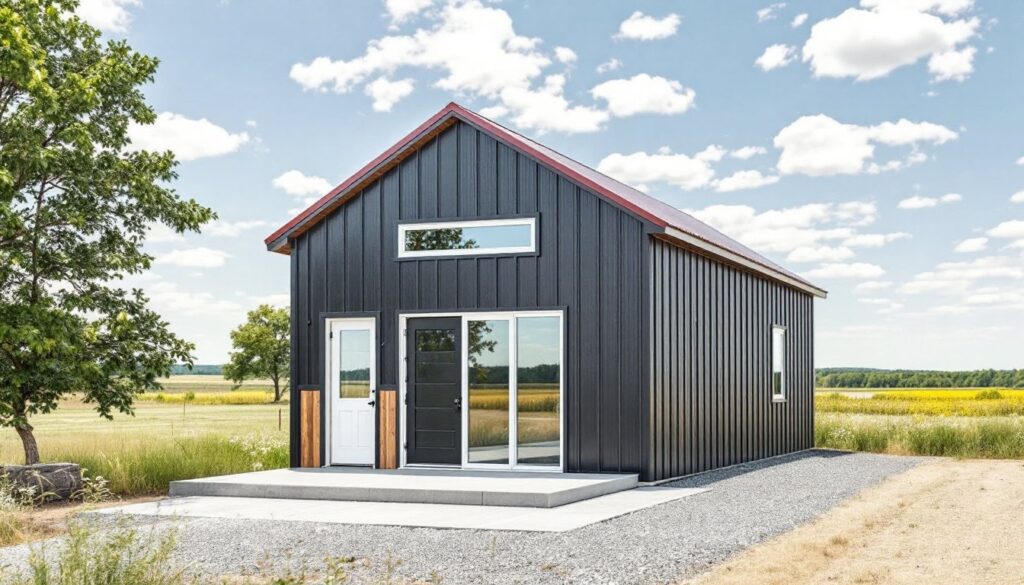
ToggleA tiny home barndominium combines the structural efficiency of metal farm buildings with the scaled-down footprint of the tiny house movement. Instead of traditional stick framing wrapped in siding, these structures use post-frame construction or steel panels to create compact, open living spaces, typically under 600 square feet, that retain the rustic appeal of larger barndominiums. They’re gaining traction among DIYers and downsizers who want durability, affordability, and a distinctive aesthetic without the maintenance demands of conventional homes. Whether someone’s building on rural acreage or adding an ADU to existing property, understanding the structural, design, and budget realities makes the difference between a successful project and an expensive learning curve.
Key Takeaways
- A tiny home barndominium uses post-frame or steel construction on permanent foundations to deliver superior durability, insulation, and design flexibility compared to traditional trailer-based tiny homes.
- Post-frame construction eliminates interior load-bearing walls, enabling wide-open floor plans where a kitchen island, sleeping loft, and multi-functional furniture maximize the 200–600 square foot footprint without compromising functionality.
- A realistic budget for a tiny barndominium ranges from $30,000 to $55,000 for DIY builds with contractor support or $75–150 per square foot for turnkey projects, including the shell, foundation, utilities, and finishes.
- Permanent foundations and metal panel exteriors resist rot, fire, and weather damage for 40+ years, eliminating the road vibration, framing flexing, and premature appliance failures common in mobile tiny homes.
- Building permits, code compliance (IRC standards), and zoning classification as an accessory dwelling unit (ADU) are essential first steps—some jurisdictions impose minimum square footage rules that can affect tiny barndominium feasibility.
What Is a Tiny Home Barndominium?
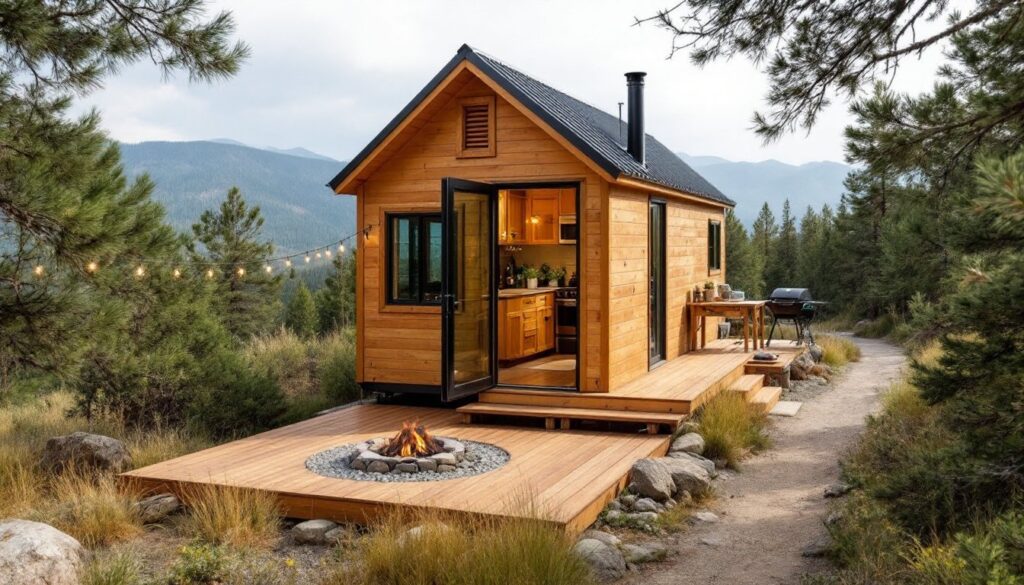
A tiny home barndominium is a residential structure built using post-frame (pole barn) or prefabricated steel construction methods, typically measuring between 200 and 600 square feet. Unlike traditional tiny homes built on trailers with wood framing, these units sit on permanent foundations, either a concrete slab, piers, or frost-protected shallow foundation, depending on local frost depth and soil conditions.
The defining characteristics include metal siding or roofing (commonly 26- or 29-gauge steel panels), open-span interiors free of load-bearing walls, and exposed structural elements like steel I-beams or laminated wood posts. Post-frame construction spaces vertical posts 8 to 12 feet on center, allowing wide-open floor plans without the need for interior columns that eat up usable square footage.
Because they’re permanently anchored, tiny barndominiums fall under International Residential Code (IRC) guidelines rather than RVIA trailer standards. That means they require building permits in most jurisdictions, along with inspections for electrical (per NEC), plumbing, and structural compliance. Foundation anchoring must meet local wind and seismic load requirements, particularly in zones with high wind exposure or seismic activity.
Most builders choose 40×15-foot or 20×20-foot footprints as a starting point. At these dimensions, the structure remains small enough to avoid triggering minimum square footage rules in some counties, while providing enough room for a sleeping loft, kitchen, bathroom, and main living area. Metal buildings in this size range often ship as prefab kits with pre-cut purlins, girts, and trim, which speeds up the shell assembly but still requires skilled labor for electrical, plumbing, and interior finish work.
Why Choose a Tiny Barndominium Over Traditional Tiny Homes
Durability is the most immediate advantage. Steel panel exteriors resist rot, termites, and fire better than wood-sided tiny homes on wheels. A properly maintained metal roof can last 40+ years without needing replacement, compared to the 15- to 20-year lifespan of asphalt shingles on stick-built structures.
Foundation stability eliminates the structural flexing and material fatigue common in trailer-based tiny homes. When a house is towed repeatedly, framing joints loosen, drywall cracks, and appliances fail prematurely. A tiny barndominium on a slab or pier foundation doesn’t experience road vibration or weight distribution issues, which translates to fewer callbacks for cabinet rehangs and tile repairs.
Insulation and energy performance improve dramatically when builders aren’t constrained by trailer width and weight limits. Walls in a post-frame barndominium can accommodate R-19 to R-21 fiberglass batts or closed-cell spray foam, and roof cavities can hit R-38 or higher with blown-in cellulose or foam board over purlins. Tiny homes on trailers typically max out at R-13 in walls due to the 3.5-inch stud depth and weight restrictions.
Permanent foundations also mean no road-legal constraints. Builders can install full-size appliances, cast-iron tubs, tile showers with mortar beds, and heavy wood-burning stoves without worrying about axle weight limits. The design flexibility found in farmhouse builds translates well to tiny barndominiums, where rustic finishes like shiplap, reclaimed barn wood, and exposed steel beams create character without adding structural complexity.
Zoning and financing present a mixed bag. Some jurisdictions classify tiny barndominiums as accessory dwelling units (ADUs), which can simplify permitting if the lot already has a primary residence. But, banks often hesitate to finance structures under 400 square feet, viewing them as specialty builds with limited resale appeal. Cash purchases or construction loans converted to conventional mortgages after completion are the most common paths.
Design Ideas for Maximizing Space in Your Tiny Barndominium
Open Floor Plans and Multi-Functional Areas
Eliminating interior load-bearing walls is a structural advantage of post-frame construction, and it’s the cornerstone of functional tiny home design. The main living zone should combine the kitchen, dining, and seating areas into a single 12×20-foot space (or similar), with furniture placement defining each zone rather than walls.
Kitchen peninsulas or islands with overhangs serve triple duty: food prep surface, dining counter, and visual divider. A 36-inch-deep base cabinet with a waterfall countertop edge provides seating on one side and storage on the other, eliminating the need for a separate dining table. Appliances should be 24-inch-wide apartment-size models, dishwashers, ranges, and refrigerators all come in narrower formats that free up 6 to 12 inches of wall run compared to standard 30-inch units.
Built-in furniture anchored to the steel frame or slab eliminates the wobble and wasted space that comes with freestanding pieces. A murphy bed with a fold-down desk on the reverse side converts a sleeping area into a home office in under 30 seconds. Window seats with hinged lids double as storage benches, and they make use of the 24 to 30 inches of depth beneath sill height that would otherwise go unused.
Bathroom layouts benefit from corner-entry showers (typically 32×32 inches or 36×36 inches) rather than tub-shower combos. A wall-mounted toilet with a concealed tank saves 3 to 4 inches of floor space compared to a traditional two-piece unit, and a floating vanity opens up visual floor area while providing room for a laundry basket or step stool underneath.
Vertical Storage and Loft Solutions
Ceiling height drives storage capacity. Most steel building kits offer 10- to 14-foot eave heights, which leaves room for a sleeping loft accessible by a ship’s ladder, alternating-tread stair, or vertical ladder. A loft with a 6-foot-6-inch ceiling (minimum per IRC for habitable space) requires roughly 10 feet of clear height at the main floor if you account for floor joist depth and headroom below the loft edge.
Open shelving mounted on steel studs or wood girts can run the full height of the wall, particularly in the kitchen and closet zones. Use 12-inch-deep shelves for pantry goods and linens, and 16-inch-deep units for clothing and bins. The strategies used in smaller apartments apply directly here: vertical dividers for baking sheets and cutting boards, tiered organizers for canned goods, and pull-down closet rods for seasonal storage.
Overhead storage above doorways and in the bathroom gains back dozens of cubic feet. A 12-inch-deep cabinet spanning a 36-inch-wide doorway holds off-season gear, and it doesn’t interfere with traffic flow. In the bathroom, a shelf mounted 12 inches below the ceiling line holds extra towels and toilet paper without crowding the vanity counter.
Loft railings should meet IRC guardrail requirements: minimum 36-inch height (42 inches is safer) with balusters spaced no more than 4 inches apart if children will be present. Cable railing systems using stainless steel wire or steel rod keep sightlines open and don’t visually chop up the interior, but they still require posts every 4 to 6 feet to meet deflection and load standards.
Building Costs and Budget Considerations
Shell kits for a 400-square-foot post-frame or steel building range from $8,000 to $15,000, depending on gauge, insulation package, and manufacturer. That price includes the metal panels, framing members, fasteners, and trim but excludes the foundation, interior finishes, utilities, and labor. Expect to add another $4,000 to $7,000 for a 4-inch concrete slab with vapor barrier, rebar, and perimeter insulation in moderate climates. Frost-protected shallow foundations cost less in materials but require more precision in layout and drainage.
Electrical, plumbing, and HVAC represent the next major expense. A basic electrical service with a 100-amp panel, wiring for lighting and outlets, and a few dedicated circuits for kitchen appliances runs $3,000 to $5,000 if the builder does the rough-in and hires a licensed electrician for the panel hookup and final inspection. Plumbing for a single bathroom and kitchen, PEX supply lines, ABS or PVC drains, and a tankless water heater or small electric unit, adds $2,500 to $4,000, assuming the septic or sewer connection is already in place.
Heating and cooling options include mini-split heat pumps (around $1,500 to $2,500 installed for a single-zone 12,000-BTU unit), which provide both heating and cooling with minimal ductwork. In colder zones, a vented propane heater or small wood stove offers backup heat, but both require clearances to combustibles and proper venting per manufacturer specs and local code.
Interior finishes vary wildly based on material choices. Drywall over metal studs costs roughly $1.50 to $2.50 per square foot installed, while tongue-and-groove pine or shiplap runs $3 to $6 per square foot depending on grade and whether it’s primed. Luxury vinyl plank (LVP) flooring is the go-to for tiny barndominiums, $2 to $4 per square foot installed, because it’s durable, easy to clean, and handles temperature swings better than hardwood.
Windows and exterior doors add up quickly. A single 3×5-foot vinyl double-hung window costs $200 to $400, and a steel insulated entry door with a jamb runs $400 to $700. For a tiny barndominium with four windows and one entry door, budget $1,500 to $2,500 for these components.
All-in costs for a DIY-friendly build with hired help for the foundation pour, electrical panel, and plumbing inspection typically land between $30,000 and $55,000, depending on finishes, location, and how much of the framing, insulation, and interior work the owner tackles. Turnkey builds by a general contractor can run $75 to $150 per square foot, which puts a 400-square-foot unit in the $30,000 to $60,000 range if the contractor sources materials efficiently. Builders following advanced framing techniques can sometimes trim costs by optimizing stud spacing and reducing lumber waste, though post-frame construction already minimizes stick framing.
Permit and impact fees vary by jurisdiction. Rural counties may charge $500 to $1,500 for a building permit, while cities with utility connection fees, plan review costs, and inspection surcharges can push that number to $3,000 or more. Always confirm local requirements before ordering materials, some areas impose minimum square footage rules or design standards that affect tiny home feasibility.
Conclusion
A tiny home barndominium offers a practical middle ground between the mobility of trailer-based tiny houses and the permanence of traditional construction. The combination of metal durability, open-span framing, and compact square footage appeals to DIYers who want a project they can finish in months rather than years, without sacrificing long-term performance. Success hinges on realistic budgeting, careful attention to code requirements, and smart space planning that makes every square foot work. With the right foundation, insulation, and finish choices, a tiny barndominium can deliver decades of low-maintenance living in a footprint that leaves room for the rest of life.